
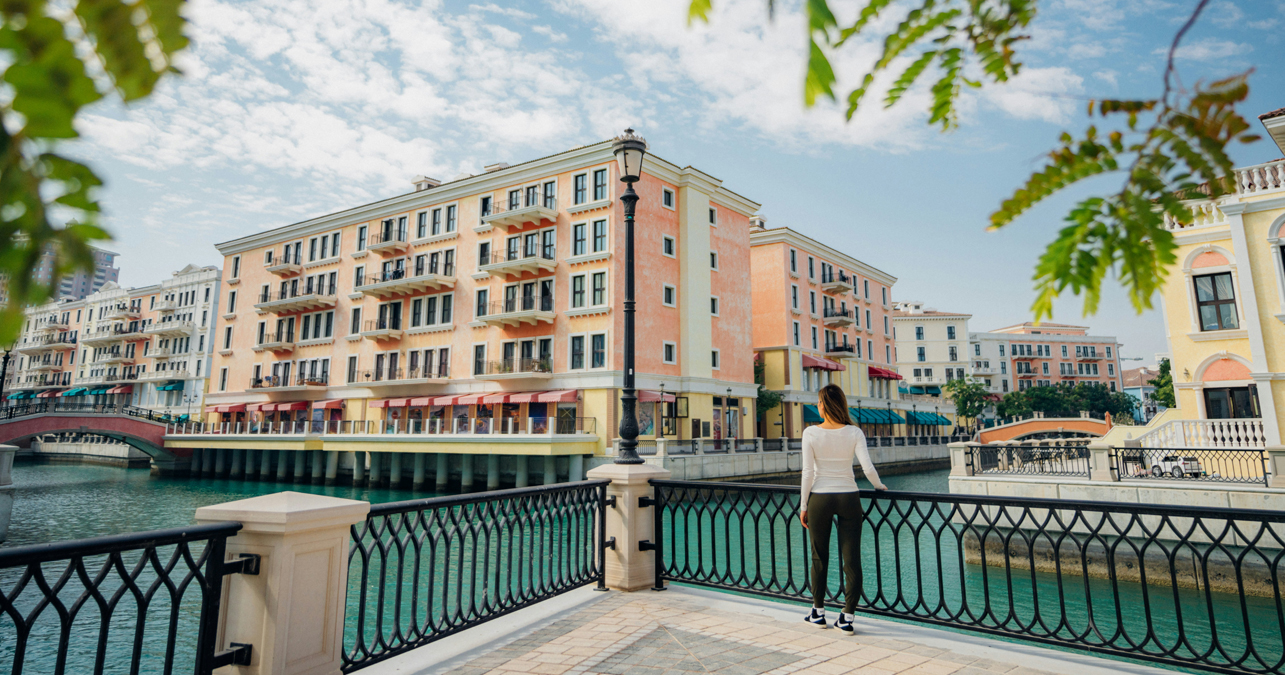
Qatar is one of the most open property markets in the Gulf for foreign buyers. You can buy property outright as a non-Qatari, gain residency through your investment, and pay some of the lowest fees in the region. This guide explains who can buy, where to look, how to use agents, what the law says, how much it costs, and what benefits you get.
Who Can Buy and Where
Foreign ownership in Qatar is regulated under Law No. 16 of 2018 (updated by Law No. 1 of 2025) and Cabinet Decision No. 28 of 2020 and its amendment in 2026. Non-Qataris cannot buy anywhere in Qatar. Ownership is restricted to specific zones, and the rights you get vary according to the zone in which the property is located.
There are two types of zones:
Freehold zones are areas where you have full ownership of the property and the land, with no time limit, and you can sell, rent, mortgage, and inherit the property. Under Cabinet Decision No. 21 of 2026, which replaced the previous freehold zone list, there are now ten areas and projects that can be bought by non-Qataris. These include The Pearl, Lusail, West Bay (Legtaifiya), Al Khor Resort, Al Dafna (Zones 60 and 61), Onaiza, Al Khuraij, Jabal Thuaileb, and the new Simaisma Beach Resort and Theme Park project. Each area or project is identified by a cadastral zone number and map.
Usufruct zones are areas where you do not have full ownership but rather a right to use the property for a maximum of 99 years (which can be renewed). There are currently sixteen such areas, mostly older Doha neighborhoods like Msheireb, Fereej Bin Mahmoud, Al Sadd, Al Mansoura, Fereej Abdul Aziz, Najma, and Umm Ghuwailina.
In addition, non-Qataris can also buy eligible detached units in residential complexes, and offices or shops in commercial complexes, even if they are not located in the above-listed zones. Because ownership eligibility is based on a cadastral zone number and not a neighborhood name, it’s crucial to verify that the exact plot or building you intend to purchase is in a zone where non-Qataris are allowed to own before paying any deposit.
Searching for Property Online
It’s a good idea to start looking online so that you know the market prices before you talk to anyone. There are a number of websites in Qatar to help you do this.
Arady is a Qatar-focused PropTech company that sells and rents lands, villas, and apartments directly from sellers, agents, and developers. Arady is designed for the way Qatar works, allowing you to search properties using a zone number instead of just an address. You can also see price maps showing the highest, average, and lowest prices in each zone using real-time listing data. This allows you to check whether the asking price is reasonable before making any offers. You can also search apartments for sale in Qatar by area, price, size, and beds.
Another important portal is Property Finder Qatar, which is one of many portals from the regional Property Finder Group. It features a significant number of agency listings from all over Doha, including Lusail and Al Wakra. The websites of individual licensed real estate agencies are also worth visiting. You’ll get a better idea of the market if you search across two or three different portals to ensure you aren’t paying too much or getting stuck with an old listing.
Working With Real Estate Agents
The activity of real estate brokerage is regulated by Law No. 22 of 2017, under which the Ministry of Justice is now responsible for licensing real estate agents. Only those who are licensed may engage in real estate brokerage activities. The Ministry of Justice also maintains a list of licensed real estate brokers, together with their license numbers and contact information.
Be sure to ask if the agent or agency you’re working with is licensed before signing anything. A good agent will not only provide you with property listings but also ensure that the property is located in a zone where foreigners are permitted to buy property, that the person selling the property has the right to do so, arrange property viewings, assist you in negotiating the price, and guide you through registration at the Ministry of Justice. Always ask for the license number, request references, and be very clear about your budget and what you need. The brokerage law requires a contract between the broker and the client, so make sure you sign one.
The Buying Process Step by Step
After you have made your list of potential properties and viewed them, the buying process generally goes like this:
- Make an offer and agree on the terms: you and the seller agree on the price and terms of the deal, and this is usually documented in a reservation agreement or memorandum of understanding.
- Pay a deposit: it is common to pay a deposit to reserve the property. This is often around 10%, although the amount is negotiable. Don’t pay a non-refundable deposit until you’ve checked that the property is legally for sale to a non-Qatari buyer, and that the seller is able to sell it.
- Carry out due diligence: ensure that the title deed is in order and that there are no outstanding debts or encumbrances against the property. Check that any necessary building permits and developer approvals are in place, and that (if you’re buying a unit) the service charges are up to date. Because legal documents in Qatar are in Arabic, we strongly recommend that you engage a lawyer to check the Sale and Purchase Agreement (SPA).
- Sign the SPA: this is the document setting out the terms and conditions of the sale.
- Arrange financing (if required, see below) and pay the balance.
- Register the title deed: the transaction is finalized at the Ministry of Justice Real Estate Registration Department, where the purchaser is entered in the register as the new owner and the title deed is issued. Registration is swift, and the Real Estate Regulatory Authority says Qatar leads the world in the ease of registering real estate, issuing ownership documents and building plans within 24 hours. However, a full purchase will still usually take several days or even weeks, depending on the extent of due diligence, the terms agreed upon, and any financing involved.
- Handover: you take possession of the property.
When purchasing off-plan, the developer will issue an SPA that stands in lieu of the title deed until the property is completed and formally registered.
Costs and Fees
Qatar’s transaction costs are some of the lowest in the region. There is no annual property tax and no personal income tax.
- Registration fee: 0.25 percent of the property value, payable by the purchaser at the time of registration. This rate is fixed by Minister of Justice Decision No. 5 of 2026, which was published in the Official Gazette on 15 January 2026. For an apartment purchased for QAR 2,000,000, the fee is QAR 5,000, with no maximum cap.
- Title deed issuance: a nominal administrative charge is charged to issue the title deed and the registration map. In January 2026, the Ministry of Justice reduced this from QR 300 to QR 100; replacement title deeds were also reduced to QR 100.
- Developer transfer fee: if you wish to sell off-plan in The Pearl or similar project before construction is complete, the developer will charge a transfer fee (typically 2.5 percent in the past). Check the developer’s requirements before you buy.
- Agent commission: this is standard in Qatar and is usually expressed as a percentage of the final sale price. Clarify in writing who is responsible for paying commission and at what rate before committing.
- Mortgage registration: if you use a mortgage to purchase the property, mortgage and lien registration fees were fixed at 0.025 percent of the value of the secured debt by the Ministry of Justice in January 2026 (around QAR 250 per QAR 1,000,000 borrowed).
- Service charges: in properties that are part of a managed development (for example, The Pearl), owners are required to pay ongoing service charges to cover shared spaces, amenities and district cooling. These can be substantial, so make sure to include these in your calculations.
Financing as a Foreigner
Foreign nationals are eligible to obtain mortgages in Qatar, but the conditions tend to be tighter than those applied to residents. Loan-to-value ratios and tenures are governed by regulations set by the Qatar Central Bank.
Resident borrowers can borrow up to 75% LTV for property valued up to QAR 6 million and 70% LTV for property over that amount, both with a maximum term of 25 years. Most expat residents will need to make a down payment of 20 to 40 percent.
Non-residents generally need to make a higher down payment and will be offered a lower LTV and/or shorter term. Often non-residents can only finance their purchases from select developments where the developer has already entered into an agreement with a bank. So check if your property is eligible before proceeding. Get pre-approval before you start looking. Verify current lending criteria with your bank and the Qatar Central Bank.
Residency Benefits of Property Ownership
One of the most significant advantages is that purchasing certain property types may lead to eligibility for residency without needing an employer sponsorship. Under the current rules:
- A property purchase of at least QAR 730,000 (approx. USD 200,000) entitles you to a renewable residence permit, provided the property is maintained. This mid-tier market option, renewable annually, was announced by Eng. Khalid bin Ahmed Al Obaidli, Chairman of RERA, and introduced at the Qatar Third Real Estate Forum.
- A property purchase of at least QAR 3,650,000 (approx. USD 1 million) makes you eligible for permanent residency. This offers more comprehensive rights such as free access to healthcare and education, and some commercial activities. However, it is capped at 100 approvals per year, making it a competitive route.
Ownership and residency are processed through different channels. Ownership registration goes through the Ministry of Justice. Residency applications go through the Ministry of Interior. You will need to prove a clean criminal record, pass a medical test, have health insurance, and provide proof of a legal income source. Residency may also require you to spend a minimum of 90 days a year in Qatar. Check with the relevant ministries for the latest requirements.
Some Tips to Remember
- Check the exact zone based on cadastral number, not just the neighborhood name.
- Work only with Ministry of Justice registered agents. Always sign a written sales agreement.
- Hire an independent lawyer to translate and check the contract. Do thorough due diligence.
- Do not sign any agreement or pay a non-refundable deposit until title and the seller’s authority to sell have been verified.
- Factor in monthly service charges. If the property is in a managed community, you may also need to pay for district cooling.
- Cross-reference the listing with other property portals to ensure the asking price is fair before making an offer.
Featured image: Photo by Visit Qatar on Unsplash
Related Articles:
- 8 Things You Should Know Before Moving to Doha
- How To Get Qatar Permanent Residency & Benefits
- Things To Know Before You Rent An Apartment in Doha
Copyright © DohaGuides.com – Full or partial reproduction of this article in any language is prohibited.